
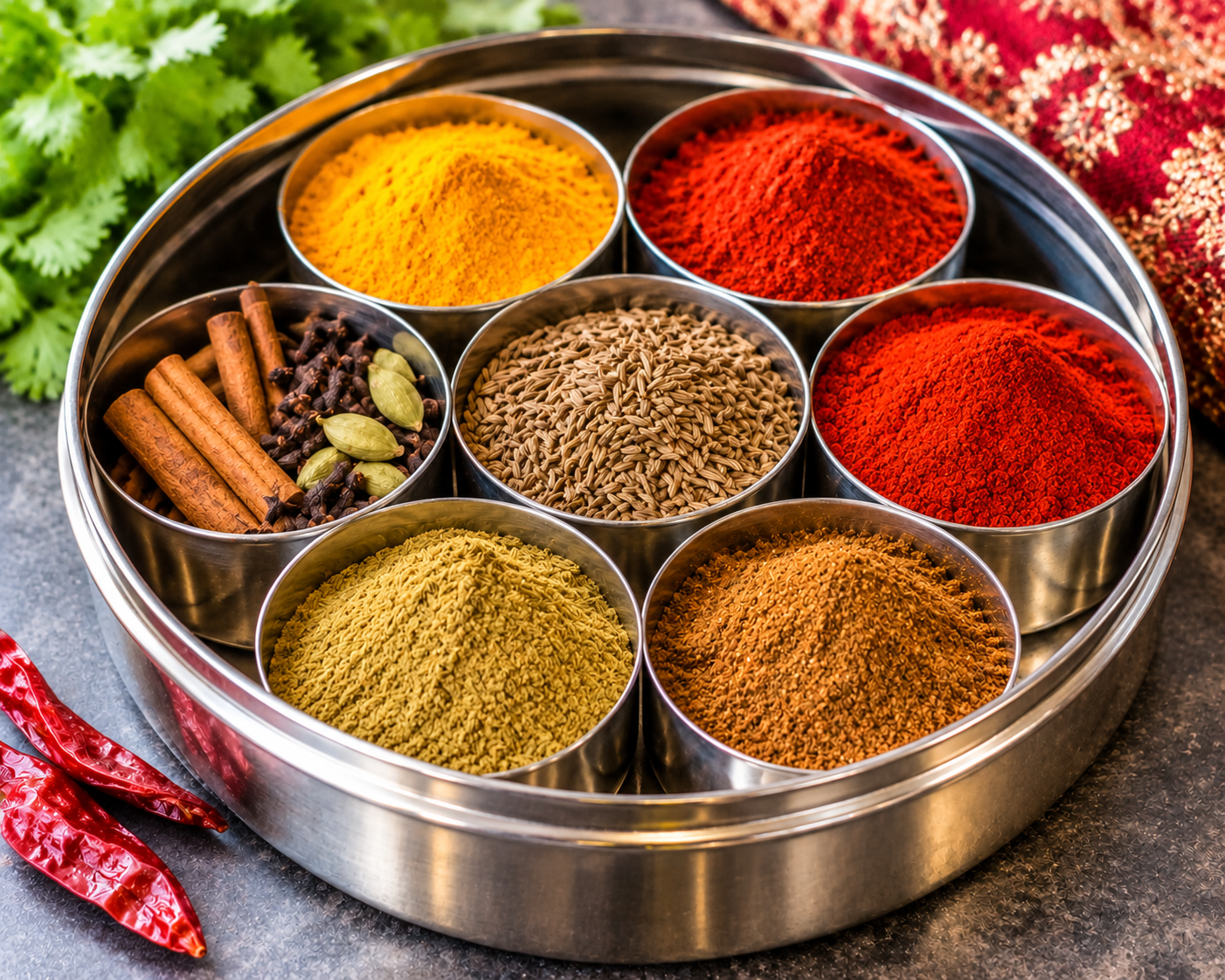
When people ask me what makes a really good Indian curry, my answer is always the same: it’s not just about how much chilli you use. It’s about understanding your spices and knowing how to bring their flavours together.
After 17 years of teaching Indian cooking, I’ve found that one of the things people enjoy learning most is how to use spices properly. Once you understand this, you can start creating dishes with much more confidence in your own kitchen.
It’s About More Than Just Adding Spices
Indian cooking uses a wonderful variety of spices, each bringing something different to a dish.
Some add warmth, others bring colour, fragrance or depth of flavour. Cumin, coriander, turmeric, chilli, paprika and garam masala are just a few of the spices you’ll find in many Indian kitchens.
But simply adding them all together doesn’t guarantee a good curry.
The secret is understanding which spices work well together, how much to use and when to add them.
Why the Order Matters
One of the most important techniques I teach in my cooking classes is understanding when to add different spices.
Whole spices are often added to hot oil at the beginning of cooking. This helps release their natural aromas and creates a lovely base for the dish.
Ground spices are usually added at a later stage, after the onions, garlic and ginger are ready. They need to be cooked gently to develop their flavour.”
It’s important not to let them burn, as this can make your curry taste bitter. A little moisture from tomatoes or water can help the spices cook without catching.
These small techniques can make a big difference to the finished dish.
Getting the Balance Right
A good curry should have layers of flavour rather than simply tasting hot.
Chilli brings heat, but it shouldn’t overpower everything else. Coriander and cumin contribute warmth and depth, while turmeric adds colour and its own distinctive flavour.
Garam masala is often added towards the end of cooking to bring the flavours together.
The balance will depend on the dish you’re making. A Punjabi-style curry, a biryani and a street-food dish all use spices in different ways.
Learning to recognise these differences is part of the enjoyment of Indian home cooking.
Learning Through Hands-On Cooking
You can find hundreds of curry recipes online, but following a list of ingredients doesn’t always explain why something is done in a particular way.
When I teach, I like people to understand the techniques behind the recipe. I explain how to prepare the ingredients, build the flavours and recognise when the spices have cooked properly.
Once you understand these basics, you can become more confident adapting recipes and experimenting with different ingredients.
Learn Authentic Indian Cooking with Farzana
I offer friendly, hands-on Indian, Pakistani and Punjabi cooking lessons across Greater Manchester.
Whether you’re a complete beginner or already enjoy cooking, lessons are tailored to what you would like to learn.
You can choose private one-to-one lessons, couples’ cooking, small groups, half-day or full-day experiences, as well as online lessons.
For in-person classes, ingredients are provided, and you can cook in your own kitchen or mine.
My aim is to help you understand the food you’re making, learn useful techniques and feel confident recreating those flavours at home.
Ready to improve your Indian cooking?
Explore my Indian cooking classes and find a lesson to suit you.
I’d love to help you discover the enjoyment of authentic Indian home cooking.
